The Myth of the One Perfect Group Chat
The one perfect group chat does not exist. Match the channel to your group’s purpose, privacy needs, pace, and expectations to make messages easier to use.
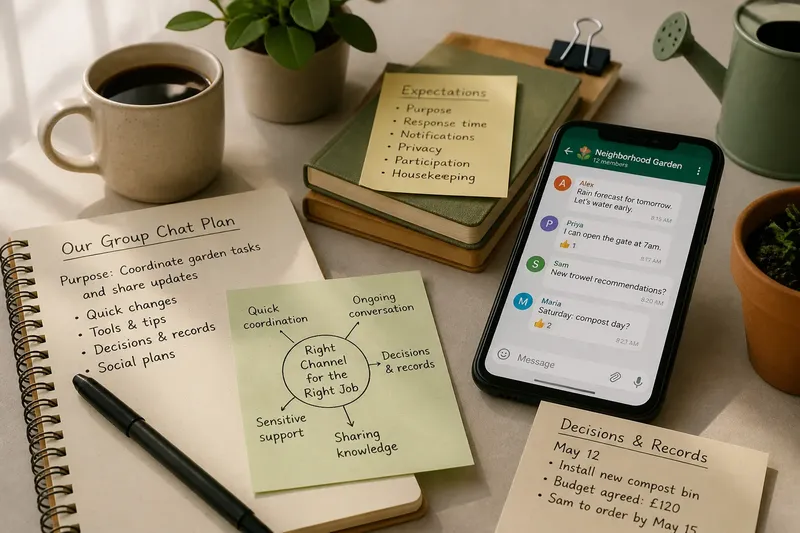
The one perfect group chat does not exist; the right channel depends on what your group needs to do together. A chat for quick schedule changes can become a poor home for careful decisions, family updates, and requests for help. Start by naming the purpose, then choose a channel and expectations that fit it.
Think of a messaging tool as a shared table: people need to know what belongs there and how to take part. The app matters, but a clear agreement about its use matters more. Use this decision guide to find a setup that fits your group’s actual habits.
What does your group need the channel to do?
Before comparing apps, finish this sentence: “We use this space to…” Keep the answer narrow enough that a new member could tell what to post. If the group has several different jobs, it may need separate spaces or a different way to handle some of them.
- Quick coordination: Choose a channel people can check easily when plans shift. Keep messages focused on timing, location, and changes.
- Ongoing conversation: Choose a space that supports replies and lets members follow a thread without every comment becoming a separate interruption.
- Decisions: Use a channel where the question, options, and final decision can be found later. Chat can surface opinions, but a pinned note or shared document may be better for recording the outcome.
- Sharing knowledge: Use a space with searchable messages or a maintained reference page. A fast-moving chat is often a poor archive unless someone organizes useful information.
- Sensitive support: Do not assume a group thread is private enough for personal disclosures. Ask what the person wants shared, and consider a direct conversation or a smaller, appropriate group.
These jobs can overlap, but make the primary purpose explicit. If the group keeps changing plans in chat while losing the agreed details, keep the quick exchange and move the lasting record somewhere members know to look.
Which setup fits your group’s situation?
What if members use different devices or have limited data?
Favor an accessible, low-friction option that members can reach with the devices and connections they already have. Ask before settling on a service, and offer a non-chat route for anyone who cannot or does not want to use it.
What if the group includes people with different comfort levels?
Set a simple starting point: explain the channel’s purpose, how to mute or leave it, and where important updates will appear. Do not treat silence as agreement or expect everyone to reply at the same speed.
What if the group needs a record of decisions?
Let the chat host discussion, then put the decision in a stable, easy-to-find place with the date and any next action. This separates conversation from the record and helps people who missed the live exchange catch up.
What if members want different levels of privacy?
Keep general coordination in the shared space and move personal matters to a smaller conversation with consent. Agree who may invite members and what should not be forwarded beyond the group.
What expectations should you agree on?
A short agreement prevents a channel from acquiring rules by accident. Put the essentials in a pinned message or group description, and revisit them when membership or purpose changes.
- Purpose: Say what belongs here and name another route for topics that do not.
- Response time: Make clear whether a message needs a reply soon, later, or only when convenient. For urgent matters, name a separate contact method rather than relying on an unread message.
- Notifications: Let members mute the chat and check it on their own schedule. Keep nonurgent messages from being framed as demands for immediate attention.
- Privacy: Agree not to forward personal messages or add someone without asking. Clarify that members should share only what they are comfortable having the group see.
- Participation: Allow people to read without posting, and offer another way to contribute if the conversation format is difficult for them.
- Housekeeping: Decide who updates membership, posts recurring information, and moves lasting decisions into the group’s reference space.
Keep the agreement practical rather than ambitious. A few expectations people can remember are more useful than a long policy no one checks.
When should you split or change channels?
Consider a change when the same problem keeps recurring: essential information disappears in conversation, members receive messages unrelated to the group’s purpose, or people avoid participating because the pace feels demanding. First identify the friction. A new app will not fix unclear expectations or an unwanted obligation to respond.
Say you coordinate a neighborhood garden through a group chat. Members use it for watering changes, but tool questions and social plans bury schedule updates. You could keep the chat for changes, create a shared note for enduring instructions, and move optional social conversation to a separate space; the observable aim is that a member can locate the current watering plan without scanning unrelated messages.
Make a change with the group, not to it. Explain what is moving, where it will go, and what happens to the old messages. Keep a transition period if members need time to adjust, and invite feedback from people who use the channel differently.
How can you tell whether the arrangement fits?
Look for practical signs: members know where to post, important decisions remain findable, and people can participate without being expected to monitor every exchange. Ask a direct question at a group meeting or in a brief message: “What is hard to find here?” Specific answers are more useful than a general vote on whether the chat is good.
If the arrangement is not working, change one thing at a time: clarify the purpose, adjust the response expectation, or move one kind of information elsewhere. The best group chat is not the one with the most features. It is the channel your members understand how to use, alongside other routes that serve the group’s distinct needs.